

How Big Is Big Enough?
The increasing size of Australian homes
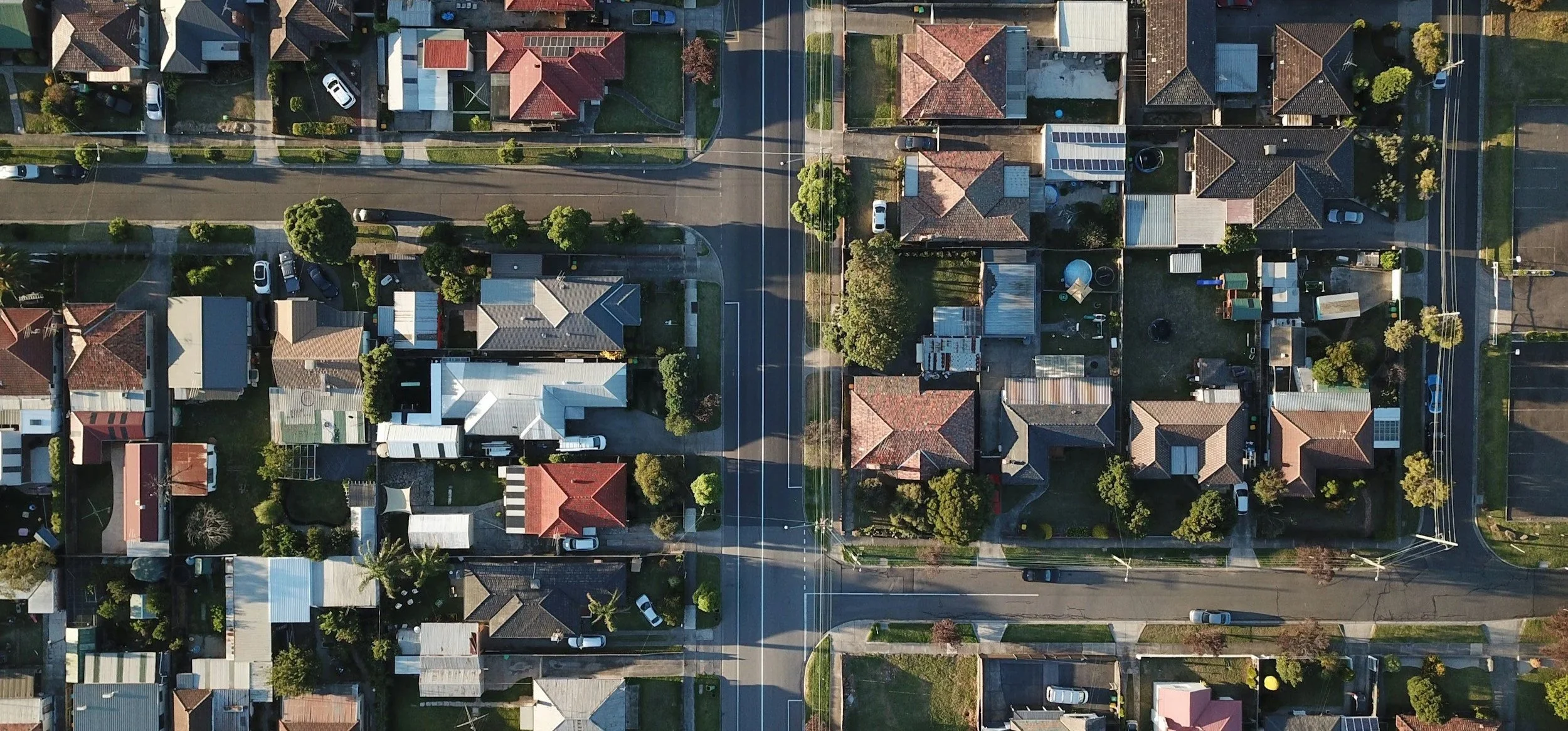
Over the past two decades, the size of new homes in Australia has steadily increased.
According to the Australian Bureau of Statistics, the average size of a new house built in 2022 was 236.6 square metres. In 2000, that figure was 199.3 square metres. In less than twenty years, the typical Australian home grew by nearly 40 square metres.
This shift raises an important question.
Not simply how big are our homes becoming?
But how big do they truly need to be?
For homeowners considering a renovation or new build, this question sits at the heart of good design. Particularly for families seeking a home that feels generous, calm and supportive, without being excessive.

Why are homes getting larger?
There are several forces shaping this trend.
Land prices have increased significantly, particularly in metropolitan areas. As blocks become smaller and more expensive, there can be pressure to maximise built form in order to “justify” the land investment.
Dual-income households have also become the norm. With both parents working, homes are often expected to accommodate workspaces, study zones, retreat areas and multiple living environments. The house must perform more functions than ever before.
There is also a cultural aspiration toward spaciousness. Open-plan living, larger kitchens, multiple bathrooms and dedicated entertaining areas have become standard expectations rather than luxuries.
None of these drivers are inherently problematic. They reflect genuine lifestyle shifts.
However, they do prompt a deeper consideration.
Does increased size automatically translate to improved liveability?
The environmental impact of scale
Size is not neutral.
Larger homes require more materials during construction; concrete, steel, timber, glazing. The production and transport of these materials carries a measurable carbon footprint.
Once built, larger homes demand more energy to heat, cool and maintain. Even well-insulated buildings consume more energy when there is simply more volume to condition.
Beyond the individual dwelling, increased house size can contribute to broader urban expansion. As cities spread, green spaces are reduced and transport reliance increases.
For homeowners who value sustainability, this presents a tension. How do we create homes that feel generous and comfortable, while remaining responsible stewards of land and resources?
The answer is not necessarily “build smaller.” Instead we need to “build better”.
The idea of “enoughness”
In architecture, there is a concept we return to often: enoughness.
Enoughness requires reflection on:
What does this family genuinely need?
How do they live, gather, retreat and work?
What spaces will be used daily?
What spaces might rarely be occupied?
When a home is designed with enoughness in mind, every square metre serves a purpose. Circulation is efficient. Storage is integrated. Natural light is optimised. Spaces are adaptable rather than duplicated.
The result is not a smaller home for the sake of restraint, it is a more intentional home.
In many cases, this leads to improved comfort, better passive performance and reduced long-term operational costs. It also creates homes that feel calm rather than overwhelming. For families seeking long-term value and quality, this balance becomes critical.

Designing for efficiency and experience
Efficiency in architecture extends beyond energy ratings.
It encompasses orientation, ventilation, thermal performance, durable materials and construction methodology. It also includes how a home supports daily life.
Natural light reduces reliance on artificial lighting.
Thoughtful zoning reduces heating and cooling loads.
Durable materials reduce future replacement cycles.
Well-considered layouts reduce unnecessary floor area.
But efficiency must also be human.
A home should feel comfortable.
It should feel intuitive.
It should feel proportionate to the life lived within it.
When efficiency and experience are aligned, sustainability is no longer an add-on feature. It becomes embedded in the architecture itself.
So, how big is big enough?
There is no universal answer.
For some families, additional space will genuinely improve functionality. For others, rethinking layout and flow may be the solution for greater value than increasing footprint.
What matters most is not the number of square metres, but the alignment between space and lifestyle.
A well-designed 220-square-metre home can feel more generous than a poorly considered 300-square-metre one.
At Cooper & Blake, we believe true quality lies not in scale, but in clarity. Homes should be timeless, site-responsive and deeply connected to the people who inhabit them.

A starting point
If you are considering a renovation or new build, one of the most valuable exercises is defining what “enough” means for you.
What do you want your home to support?
Where do you want to invest in quality?
Where might you refine rather than expand?
These questions sit at the heart of our complimentary Find Your Why series.
Across ten carefully structured emails, we guide homeowners through the thinking that shapes successful projects, before design begins. It is a quiet, thoughtful starting point for those who value preparation and clarity.
Because before asking how big your home should be, it is worth asking why you are building at all.